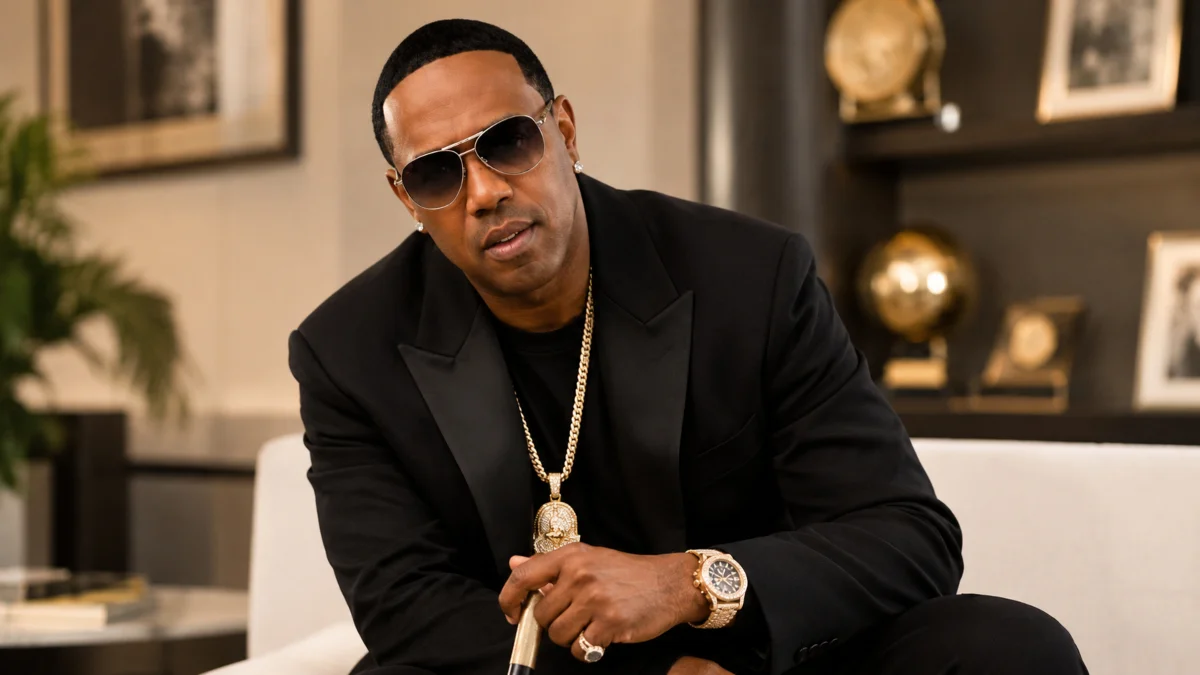
Master P net worth is estimated at $200 million in 2026, making him one of the wealthiest self-made figures in hip-hop history. Unlike most rappers of his era, his fortune isn’t tied to a single record deal or stock ticker; it’s built from decades of ownership across music royalties, food brands, real estate, and film. That range in estimates itself says something: Percy “Master P” Miller’s wealth was never simple to measure, because it was never built the simple way.
Who Is Master P?
Percy Robert Miller, known professionally as Master P, is a rapper, record executive, actor, and entrepreneur from New Orleans, Louisiana. He is best known as the founder of No Limit Records, the independent label that dominated hip-hop charts in the late 1990s while Miller retained ownership of his masters, an almost unheard-of move for an artist at that time. Beyond music, he has built businesses in film, food products, sports management, and consumer goods, making him one of the rare hip-hop figures whose wealth was built primarily through ownership rather than performance income alone.
Quick Profile
| Detail | Information |
|---|---|
| Real Name | Percy Robert Miller |
| Born | April 29, 1970, New Orleans, Louisiana |
| Occupation | Rapper, entrepreneur, record executive, actor, investor |
| Known For | Founder, No Limit Records |
| Estimated Net Worth (2026) | $200 million |
| Primary Income Sources | Music royalties, No Limit Records catalog, Rap Snacks, real estate, film, brand partnerships |
| Spouse | Sonya C. Miller (m. 1989; div. 2022) |
| Children | 9, including Romeo Miller and Cymphonique Miller |
Master P Net Worth in 2026
As of 2026, Master P’s net worth stands at $200 million, based on the most credible and actively maintained financial and entertainment sources, including Celebrity Net Worth.
That range exists because, unlike a public company with quarterly filings, Master P’s businesses are privately held. His wealth is an estimate built from known revenue history, brand valuations, real estate holdings, and music catalog worth, not an audited figure. What’s consistent across nearly every source is the scale of his empire: a fortune tied to No Limit ownership, music rights, Rap Snacks, and other food ventures, built on decades of ownership-first business decisions rather than a single windfall.
Net Worth Breakdown Through the Years (Asset-by-Asset)
Master P’s fortune didn’t arrive in one lump sum; it moved in waves tied to specific business decisions, including a well-documented dip that most coverage of his wealth leaves out entirely.
| Year | Estimated Net Worth / Financial Status | What Was Happening |
|---|---|---|
| 1998 | No Limit Enterprises generating $100M–$200M in annual revenue | Peak of the label’s commercial dominance; MP Da Last Don debuts at No. 1. |
| 2003 | No Limit Records files for bankruptcy with roughly $15M in debts | Sales decline as musical trends shift; the label restructures. |
| 2010 | ~$100 million | Rebuilds through New No Limit (2004) and No Limit Forever (2010); diversifies into new ventures. |
| 2015 | ~$150 million | Reality TV era (Master P’s Family Empire); continued brand licensing. |
| 2020 | ~$180 million | Uncle P food line launches; Rap Snacks partnership matures. |
| 2026 | $200 million | Diversified across music rights, food brands, real estate, and media. |
Asset-by-asset, his estimated wealth today breaks down across a handful of core pillars. The largest and most durable is his music catalog and royalties, built from decades of No Limit Records masters, which Miller owns outright, unlike most artists of his generation who signed those rights away.
Alongside that sits his stake in Rap Snacks and other food brands, including an equity position in the hip-hop-branded snack company plus his own Uncle P food line and Master Crunch cereal, both built around reinvesting profit into Black communities. He also holds a portfolio of real estate, made up of personal residences and investment properties spread across multiple states.
Film and television contribute a smaller but steady stream, drawn from No Limit Films projects and his ongoing acting and producing credits. Finally, sports management and consulting round out the picture, tied to his history negotiating athlete contracts, including his role in Ricky Williams’ NFL deal, and more recently a basketball operations role at the University of New Orleans.
Read more: Ryan Trahan Net Worth
Early Life: From Calliope Projects to Record Store Owner
Growing Up in the Calliope Projects
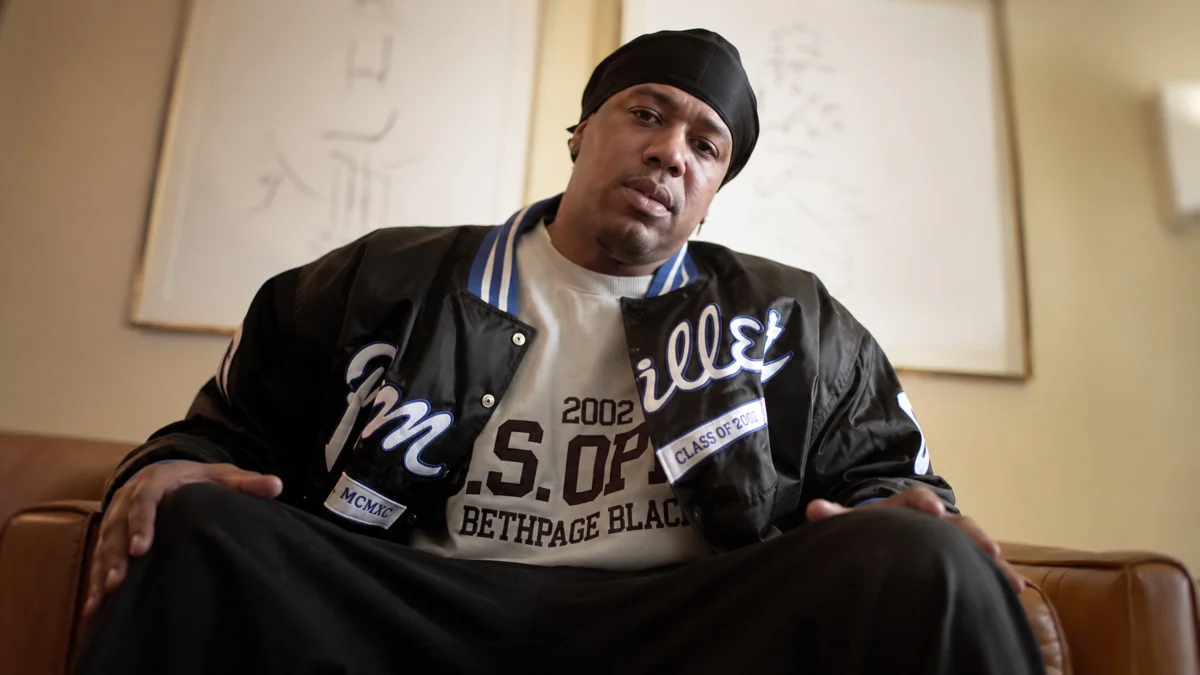
Master P was born Percy Robert Miller and raised in New Orleans’s Calliope housing project in the city’s Third Ward, an area known for high poverty and crime rates. Growing up in a large household with limited resources, he witnessed both the hardship and the survival instincts that would later shape his business mindset. His path briefly ran through the University of Houston on a basketball scholarship. Still, he left after a few months and transferred to Merritt College in Oakland, California, where he studied business.
The $10,000 That Changed Everything
The turning point came after the death of his grandfather. Miller received $10,000 as part of a malpractice settlement tied to the circumstances of his grandfather’s passing. Instead of spending it, he treated it as startup capital, a decision that separates his story from most rags-to-riches narratives in hip-hop.
Opening No Limit Records in Richmond
With that inheritance, Miller opened a record store he named No Limit Records in Richmond, California, near Oakland. The store wasn’t just a retail outlet; it became his market research lab. He tracked which artists sold, which covers caught attention, and how independent distribution actually worked, knowledge that most label executives only got from the inside of a corporate system. That hands-on retail experience is what eventually convinced him he didn’t need a traditional record deal at all; he could build his own.
Career Timeline: Building No Limit Records
Master P’s early releases as an artist, including his 1991 debut, sold modestly. The real shift came when he moved the label back to New Orleans and began building a roster of artists rather than relying solely on his own music. A distribution deal with Priority Records became the structural turning point: Miller negotiated to keep both financial control of No Limit Records and full creative control over his catalog, a combination almost no independent hip-hop label had secured at that point.
That control paid off fast. By September 1997, No Limit Records had five albums simultaneously in the top 150 on the national charts, an output level that dwarfed most major labels. The label’s 1998 peak came with the release of MP Da Last Don, which sold nearly 500,000 copies in its first week and debuted at number one on the Billboard charts while five other No Limit-produced albums sat on the Billboard top ten in the same stretch. At its commercial height, No Limit Enterprises was generating well over $100 million a year in revenue, a figure that put Miller on Forbes’ list of the decade’s highest-earning entertainers.
What made the No Limit model different wasn’t just volume; it was ownership. Because Miller controlled his masters and distribution terms, No Limit Records was structured less like a rap label and more like a vertically integrated media company, with its own film division, clothing line, and merchandise arm feeding off the same audience.
Why Some Sources Report Different Numbers
If you’ve come across other figures for Master P’s net worth elsewhere, you’re not imagining it, and it’s worth explaining rather than glossing over. Other numbers diverge for a few clear reasons. Private company valuations are estimates, not audits. No Limit Records, Rap Snacks, and Uncle P are not publicly traded, so there are no quarterly earnings reports to draw from, and analysts instead estimate value based on comparable brand sales, industry revenue benchmarks, and historical performance.
Music catalog valuation is also a moving target: catalog sales in the broader music industry have surged in recent years, and the theoretical resale value of decades of No Limit masters fluctuates with that market even though Miller hasn’t actually sold the catalog. Some outlets also count peak-era revenue instead of current asset value, and a figure built around 1998’s $100M+ in annual label revenue tells a very different story than a current snapshot of personal net worth.
One figure worth calling out specifically: a $390 million estimate occasionally appears in search results, but it traces back to a page originally published in 2017 that was never meaningfully updated. It’s a good example of why checking a source’s actual publish date matters more than the year listed in a headline. This article’s $200 million figure is based on the most credible, actively maintained sources available as of 2026.
Read more: John Daly Net Worth
Business Playbook: What Made Master P Different
Master P’s financial trajectory stands apart from most of his hip-hop peers for one structural reason: he prioritized ownership over advances. While many artists in the 1990s signed major-label deals that traded a large upfront check for long-term control of their masters, Miller went the opposite direction from the start.
The core principles behind his approach come down to a handful of consistent habits. He made a point of retaining the masters: every deal he signed, starting with Priority Records, was structured so No Limit kept ownership of its recordings, meaning royalties flowed back to Miller for decades rather than to a label. He also pursued vertical integration, expanding No Limit beyond recording into film, clothing, and merchandise, all feeding off the same fan base without needing new customer acquisition.
Volume itself became a strategy: No Limit released albums at a pace that flooded the market, so even modest per-album profits compounded quickly across a large roster. He diversified outside music early, moving into sports management, food brands, and real estate long before “rapper turned entrepreneur” was a common career arc, which built income streams that didn’t depend on album sales. And in his later ventures, he leaned into reinvesting in community-facing products, with brands like Uncle P and Rap Snacks tying business growth to brand loyalty within Black communities specifically, rather than chasing the broadest possible mainstream audience.
Personal Life: Family & Controversies
Marriage to Sonya Miller and Divorce
Master P married Sonya C. Miller in 1989. Sonya, credited as No Limit Records’ “1st Lady,” helped build the label alongside him in its early years, including production and creative work on several 1990s releases. The couple separated in 2013 after more than two decades of marriage, and the divorce proceedings stretched on for years, becoming public and contentious.
Court records showed Sonya was awarded roughly $27,000 per month in combined spousal and child support, and the case included a lawsuit Sonya filed against their son Romeo, alleging he was being used to help shield assets from her during the settlement. The divorce was finalized in 2022.

Children and Family Tragedy
Master P and Sonya have nine children together, including Romeo Miller (born 1989) and Cymphonique Miller, both of whom pursued entertainment careers. In May 2022, the family experienced a significant loss when their daughter Tytyana Miller died at 29 from an accidental drug overdose. Master P has since spoken publicly about mental health and substance abuse awareness, saying he wants to help other families talk openly about issues his own family faced privately for years.
Public Controversies
Beyond the divorce, Master P has occasionally found himself in public disputes tied to family business dealings, most notably the asset-shielding allegations raised during the Sonya Miller divorce case. He has also drawn scrutiny at times for the pace and marketing style of his business ventures, though none of these disputes have resulted in the kind of legal or financial setbacks that have affected some of his hip-hop peers.
Read more: Kyle Richards Net Worth
Master P vs. Other Hip-Hop Moguls (Comparison Table)
| Mogul | Estimated Net Worth (2026) | Primary Wealth Source |
|---|---|---|
| Jay-Z | $2.5B+ | Music catalog, Armand de Brignac, D’Ussé, tech/media investments |
| Diddy | Est. hundreds of millions (declined from prior estimates) | Music, Sean John, Ciroc/DeLeon partnerships |
| Dr. Dre | $500M–$800M | Beats by Dre sale, music production, royalties |
| Master P | $200M | No Limit Records ownership, Rap Snacks, real estate, food brands |
| 50 Cent | $40M–$50M | Vitaminwater, music, TV production (Power franchise) |
Note: Figures for peers are broad public estimates and, like Master P’s own numbers, are not based on audited financials. They’re included here for comparative context, not as precise valuations.
What stands out in this comparison isn’t that Master P is the wealthiest name on the list; he isn’t. It’s that his wealth was built almost entirely through ownership of a mid-size independent operation, without a company-defining acquisition like Dre’s Beats sale to Apple or Jay-Z’s stake in a major spirits or streaming deal. His model has been slower, broader, and more diversified by design.
Philanthropy & Community Investment
Master P has consistently tied his business ventures to community reinvestment rather than treating philanthropy as separate from his brand. In 2020, he launched the “Uncle P” food line, positioned as a Black-owned alternative to legacy packaged-food brands, with a portion of profits directed toward programs benefiting Black communities. A year later, Master P’s Master Crunch Cereal launched with a similar model, donating a share of proceeds toward education and youth resources in inner-city communities.
His giving extends beyond food brands. In 2021, he announced a $10 million initiative aimed at improving racial equity in Black and Indigenous communities through his Boss Up Foundation, which focuses on financial literacy and entrepreneurship training. He has also supported New Orleans-based youth and education programs for years, reflecting his consistent framing of business success as inseparable from reinvestment in the communities he came from.

Legacy: What No Limit Actually Changed in Hip-Hop
No Limit Records’ influence goes well beyond its chart numbers. Before Master P, it was standard for rap artists to sign traditional major-label deals, trading long-term royalty and master ownership for upfront advances and marketing support. Master P’s insistence on retaining ownership and control while still using a major distributor for reach became a blueprint that influenced how later independent labels and artists approached their own deals.
The label also proved that regional, independently marketed hip-hop could out-produce major-label output using sheer volume and direct community marketing, rather than radio-first strategies. That “flood the market, own everything” approach shaped how Southern hip-hop scenes built their own infrastructure in the years that followed, separate from the New York and Los Angeles label systems that had previously dominated the industry.
Read more: Damon Darling Net Worth
Methodology: How We Calculated This
The figures in this article are drawn from a range of publicly available sources, including celebrity wealth trackers, entertainment business publications, and historical revenue reporting from No Limit Records’ peak years. Because Master P’s businesses are privately held, none of the figures cited here come from audited financial statements they represent informed estimates built from several types of evidence: publicly reported historical revenue, such as No Limit Enterprises’ documented annual revenue during its 1990s peak; brand valuation comparisons for similarly sized consumer product companies, relevant to Rap Snacks and Uncle P; real estate records where they are publicly accessible; and cross-referencing multiple independent wealth-tracking outlets to identify a consensus range rather than relying on any single source.
Where sources disagreed significantly, this article presents the range rather than picking a single number, and flags which figures are more speculative than others.
Conclusion
Master P’s net worth story isn’t really about a single number; it’s about a structural decision he made in his early twenties that most of his peers didn’t: keep ownership, even if it means growing more slowly. That decision is why, more than three decades after opening a small record store in Richmond, California, his estimated fortune still sits comfortably around $200 million, built from a genuinely diversified base of music rights, food brands, real estate, and media ventures. In an industry built on advances and quick paydays, Master P bet on control, and it paid off for decades.
Frequently Asked Questions (FAQs)
What is Master P’s net worth in 2026?
Most credible, actively updated sources place his net worth at $200 million as of 2026.
How did Master P make his money?
Primarily through owning his No Limit Records masters and distribution rights, along with investments in food brands like Rap Snacks and Uncle P, real estate, film, and sports management.
Did Master P ever sign with a major record label?
He partnered with Priority Records for distribution but negotiated to retain financial and creative control of No Limit Records, unlike most artists who sign away those rights.
Is Master P still involved in the music industry?
While he stepped back from active recording after the late 1990s, he has continued producing, appearing in media, and managing his catalog and business ventures.
What is Master P’s relationship to Rap Snacks?
He holds an equity/partnership stake in the brand, which was founded by James Lindsay, and has been one of its most visible faces since its early growth.