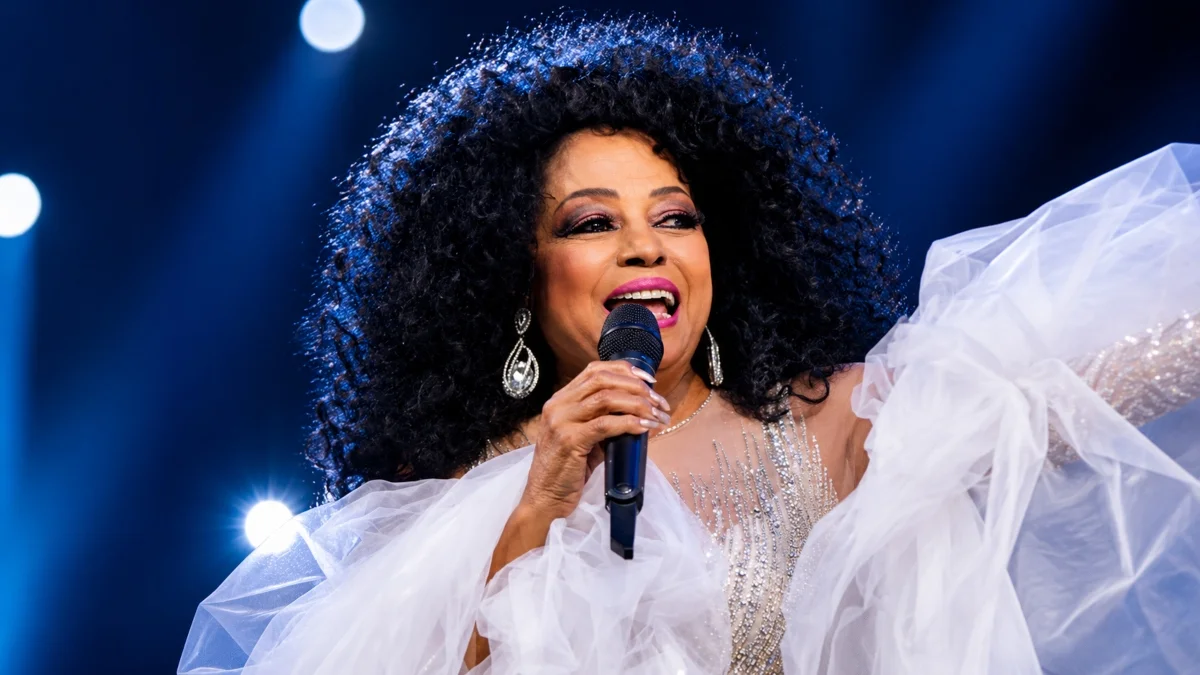
Diana Ross net worth in 2026 stands at an estimated $250 million, built across six decades of music, film, real estate, and business ownership. From a childhood in Detroit’s Brewster-Douglass housing projects to becoming the most successful female recording artist in history, Ross turned The Supremes’ early fame into lasting personal wealth through smart contract decisions, a landmark 1981 RCA Records deal, and consistent touring well into her 80s. At 82, she remains an active performer with her “Diana in Motion” concert series, proving her fortune is still growing rather than fading with time.
Quick Facts
| Category | Details |
|---|---|
| Real Name | Diane Ernestine Earle Ross |
| Alternate Name | Diana Ross (a clerical error on her birth certificate changed “Diane” to “Diana”) |
| Nickname | Miss Ross |
| Family Name | Ross |
| Date of Birth | March 26, 1944 |
| Age | 82 (as of 2026) |
| Birthplace | Detroit, Michigan, U.S. |
| Height | 5 ft 4½ in (1.64 m) |
| Profession | Singer, songwriter, actress, record producer |
| Years Active | 1959–present |
| Spouses | Robert Ellis Silberstein (m. 1971–1977); Arne Næss Jr. (m. 1985–2000) |
| Children | 5 (Rhonda, Tracee, Chudney, Ross, Evan) |
| Net Worth (2026) | Estimated $250 million (range: $200M–$350M depending on source) |
| Primary Income Sources | Touring, music catalog royalties, film residuals, real estate, brand licensing |
Her financial growth is a story of slow and steady success rather than a one-time lucky day. The biggest turning point came in 1981 when Diana made the bold choice to leave Motown for a massive contract with RCA Records, a move that completely changed her financial future.
Early Life: Before the Fame
Diane Ernestine Earle Ross was born on March 26, 1944, in Detroit, Michigan, the second of six children born to Fred Ross Sr., a former U.S. Army soldier, and Ernestine Ross, a schoolteacher. The family lived in the Brewster-Douglass housing projects and later on Belmont Road in Detroit’s North End, where, notably, her neighbor was a young Smokey Robinson, who would go on to become one of Motown’s defining voices.

Ross attended Cass Technical High School, where she studied clothing design, millinery, and pattern making; she originally dreamed of becoming a fashion designer, not a singer. To help support her family, she also took on odd jobs, including working as a bus girl at a department store lunch counter and, later, as a secretary at Motown Records itself, filing paperwork for the very label that would make her famous.
This background is important because Diana Ross started her career without any family money or backup plan. Everything she owns today was built entirely from scratch through hard work.
Read more: Misha Ezratti Net Worth
The Supremes Era: Building the Foundation
In the late 1950s, Ross joined a Detroit vocal group called the Primettes alongside Florence Ballard, Mary Wilson, and Betty McGlown. The group caught the attention of Motown founder Berry Gordy and was signed to Motown in 1961, rebranding as the Supremes.
By 1964, the Supremes had their first number-one hit, “Where Did Our Love Go,” followed by a run of chart-topping singles including “Baby Love,” “Stop! In the Name of Love,” and “You Can’t Hurry Love.” The group became Motown’s most commercially successful act of the 1960s and one of the best-selling girl groups in music history.
Financially, however, this era was not when Ross accumulated significant personal wealth. Motown’s contract structure in the 1960s paid artists modest salaries and royalty rates relative to the revenue the label generated a common arrangement across the industry at the time, and one that several Motown acts, including former Supreme Florence Ballard, later disputed in court. Ross’s real wealth-building began after she left the group.
Solo Career & The $20 Million RCA Deal (1981)
Ross departed the Supremes in 1970 to launch a solo career, scoring hits like “Ain’t No Mountain High Enough,” “Touch Me in the Morning,” and “Love Hangover” while still signed to Motown.
The turning point came in 1981. Ross left Motown, the label that made her famous. He signed a new recording deal with RCA Records reportedly worth around $20 million, an extraordinary sum for a recording contract at the time. The deal wasn’t just about the headline number; it also gave her greater ownership and creative control over her master recordings and business affairs through her own company, RTC Productions (Ross-Tarcher-Cohen), which she had already begun using to control her film and business ventures.
This single decision permanently upgraded her financial status. It turned her from just a hired singer collecting paychecks into a smart business owner who owned her own creative work the exact move that separates basic artists from multi-millionaires.
How Diana Ross Makes Money Today (2026)
At 82, Ross’s income streams in 2026 are more diversified than at any prior point in her career.
Touring and Residency Income
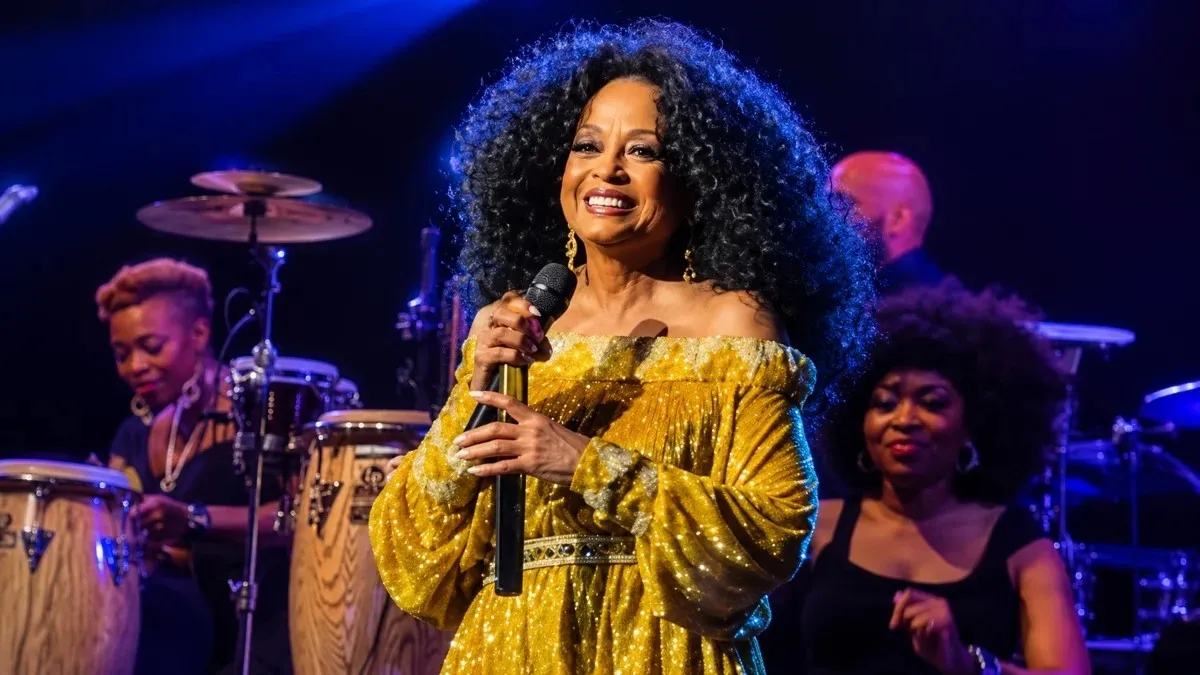
Ross has remained an active touring artist for five consecutive years. She launched The Music Legacy Tour in 2023, followed by “Diana Ross: A Symphonic Celebration” in 2025, a series built around her catalog performed with full symphony orchestra accompaniment, and in 2026 she launched “Diana in Motion,” a residency-style series of concert engagements running throughout the year. Touring remains one of her most significant active income sources, with premium-venue ticket pricing reflecting her status as a living legend.
Ross has also headlined major festival slots in past years, including the coveted “Legends” teatime slot at Glastonbury Festival in 2022. Festival organizers typically don’t disclose specific artist fees, so her exact Glastonbury payout isn’t publicly confirmed. Still, Legends Slot performers in that tier are widely reported to command six-figure sums.
Catalog and Streaming Royalties
Decades of hits both with the Supremes and as a solo artist continue to generate passive royalty income through streaming, licensing, sampling, and film/TV placements. This is a stable, recurring revenue stream that requires no active work on Ross’s part.
Film, TV, and Licensing
Residuals from her film work, along with brand partnerships and merchandising tied to her legacy status, continue to contribute modestly but steadily to her annual earnings.
Real Estate
Property appreciation, particularly on her Greenwich, Connecticut estate, represents a significant (if illiquid) component of her overall net worth.
Read more: Jennifer Aniston Net Worth
Acting & Film Career
Ross expanded beyond music in 1972 with “Lady Sings the Blues,” in which she played jazz legend Billie Holiday. The performance earned her a Golden Globe Award and an Academy Award nomination for Best Actress, a rare crossover achievement for a musician-turned-actress at the time.
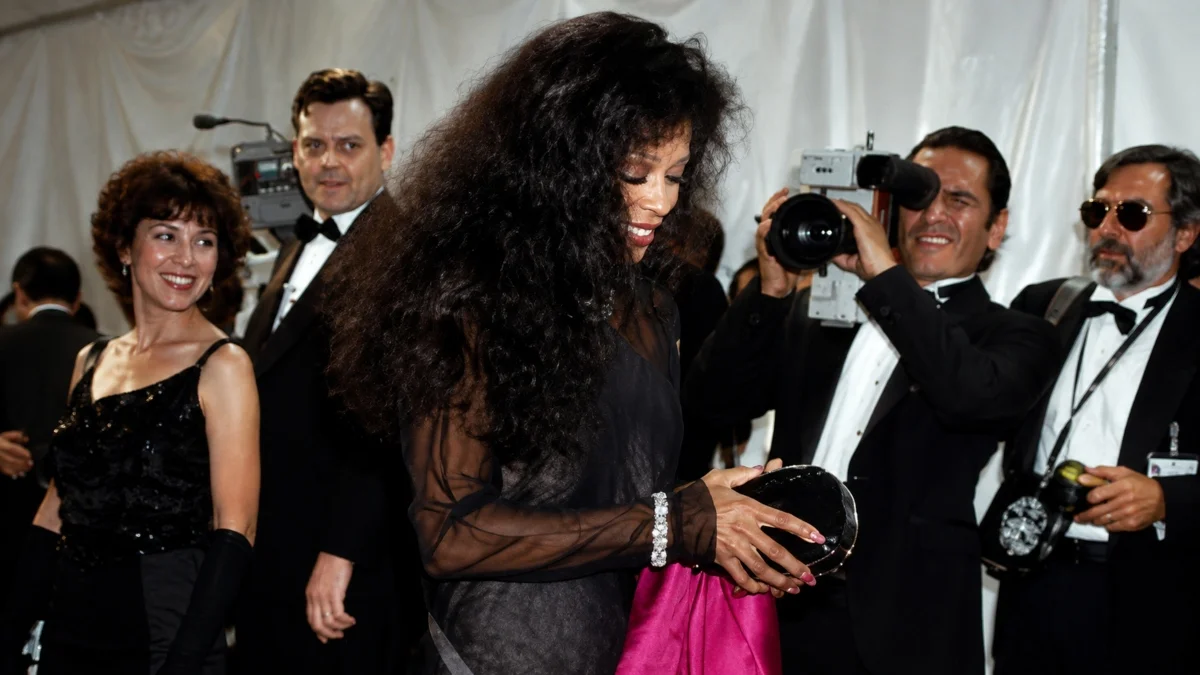
She followed this with “Mahogany” (1975) and a leading role as Dorothy in “The Wiz” (1978) alongside Michael Jackson, a modernized musical retelling of “The Wizard of Oz.” While “The Wiz” underperformed at the box office relative to its budget, it remains a culturally significant credit and contributed to Ross’s earnings through her production deal with Motown Productions, which backed several of her film projects.
Her acting career, while smaller in scope than her music catalog, added both income and long-term brand value that continues to support licensing and legacy deals today.
Net Worth Comparison: Diana Ross vs Other Motown Legends
| Artist | Estimated 2026 Net Worth | Primary Wealth Driver |
|---|---|---|
| Berry Gordy (Motown Founder) | ~$400 million | Record label ownership, publishing catalog |
| Diana Ross | ~$250 million | Touring, catalog royalties, real estate |
| Stevie Wonder | ~$200–250 million | Songwriting royalties, catalog value |
| Smokey Robinson | ~$150 million | Songwriting, touring, Motown executive role |
| Gladys Knight | ~$28 million | Touring, acting, business ventures |
This comparison highlights something important: Ross’s wealth sits closer to Motown’s founder and top songwriter-producers than to her fellow performing artists. That’s largely because her post-Motown business decisions the RCA deal, her production company, and her real estate investments gave her ownership stakes that most 1960s-era performers never secured.
Real Estate Portfolio
Ross has owned significant property over the decades, with her Greenwich, Connecticut estate as the centerpiece. She purchased the roughly 9-acre waterfront property in Belle Haven in 1980 from actor Frank Gorshin. The French Normandy-style mansion spans over 12,500 square feet and includes 11 bedrooms, multiple fireplaces, a pool, tennis court, and a guest cottage.
The property has fluctuated significantly in listed value over the years it was placed on the market, for as much as $39.5 million at one point, while its municipal tax assessment was later reduced to roughly $14.4 million following an appeal. That gap illustrates a broader point about celebrity real estate valuations: listing price, assessed value, and true market value can differ substantially, which is part of why net worth estimates that include real estate carry a wider margin of error. Ross has also owned residential property in Venice, California, reflecting a West Coast base alongside her East Coast estate.
Read more: Alix Earle Net Worth
Controversies & Financial Setbacks
Ross’s financial story isn’t free of setbacks and disputes.
The Florence Ballard lawsuit: In 1971, former Supremes member Florence Ballard sued Motown for $8.7 million, alleging she had been forced out of the group. The lawsuit was unsuccessful, and Ballard’s own financial situation deteriorated in the years that followed, a contrast that has long been part of the broader conversation around how Motown-era contracts distributed wealth unevenly among group members.
The 1983 Central Park concert: Ross organized a free benefit concert in Central Park in July 1983, intending to fund a new children’s playground using proceeds from television rights. A severe thunderstorm disrupted the event, washing out merchandise sales and forcing a costly repeat performance the following night. The concerts ultimately became a financial loss for the city, and rather than let the playground project collapse, Ross personally covered the shortfall with a $250,000 check a costly but reputation-building decision that resulted in the Diana Ross Playground, which still stands in Central Park today.
Career pressure and health: Early in her career, intense pressure from Motown’s competitive environment reportedly contributed to serious health strain, underscoring that her financial success came with high personal cost.
These episodes don’t represent catastrophic financial damage, but they do show a career where wealth-building wasn’t linear; it included real losses, generous personal spending, and periods of professional risk.
Family Wealth: Children & Their Net Worth
| Family Member | Relationship | Estimated Net Worth |
|---|---|---|
| Diana Ross | — | ~$250 million |
| Rhonda Ross Kendrick | Daughter (with Berry Gordy) | ~$20 million |
| Tracee Ellis Ross | Daughter (actress, “Black-ish,” “Girlfriends”) | ~$16 million |
| Chudney Ross | Daughter (TV producer, author) | ~$5 million |
| Evan Ross | Son (actor, musician) | ~$25 million |
| Ross Naess | Son (producer, photographer) | ~$800,000 |
Diana Ross has five children from two marriages and one earlier relationship. Her daughter Tracee Ellis Ross has built her own substantial career and net worth as an actress, known for lead roles in “Girlfriends” and “Black-ish,” earning multiple Primetime Emmy nominations along the way.
Personal Life: Marriages & Relationships
The Berry Gordy Relationship
Before her marriages, Ross had a years-long relationship with Motown founder Berry Gordy beginning in the mid-1960s. The couple had a daughter, Rhonda, born in 1971, though Ross was already married to Robert Ellis Silberstein by the time of Rhonda’s birth, and Silberstein raised Rhonda as his own daughter for years before her biological parentage became public knowledge.
Marriage to Robert Ellis Silberstein (1971–1977)
Ross married music executive Robert Ellis Silberstein in January 1971. The couple had two daughters together, Tracee and Chudney, before divorcing in 1977.
Marriage to Arne Næss Jr. (1985–2000)
Ross’s second marriage was to Norwegian shipping magnate and mountaineer Arne Næss Jr. in 1985. The couple had two sons, Ross and Evan, before divorcing in 2000. Næss passed away in 2004. Ross has not remarried since and, as of 2026, is not publicly known to be in a relationship.
Read more: Zendaya Net Worth: How the Euphoria and Spider-Man Star Built Her $40 Million Fortune
Methodology: How We Calculated This Net Worth
Because Diana Ross’s finances are privately held, no single figure can be verified with certainty. This estimate was built by cross-referencing:
- Real estate records, including purchase prices, listing history, and municipal tax assessments for her known properties
- Historical contract data, including the publicly reported terms of her 1981 RCA Records deal
- Touring industry benchmarks, based on typical fees for artists performing comparable “Legends slot” festival appearances and residency-style concert series
- Aggregated third-party net worth estimates, cross-checked across multiple independent financial trackers to identify a defensible range rather than relying on a single source
- Family and business filings where publicly available, including information about her production company and known business ventures
Where estimates diverged significantly between sources as they do here, ranging from roughly $145 million to $350 million, we opted for the figure most consistently supported across multiple trackers ($250 million) rather than the highest or lowest outlier. Readers should treat all celebrity net worth figures, including this one, as informed estimates rather than confirmed financial fact.
Conclusion
Diana Ross’s $250 million net worth wasn’t built on a single hit or a single deal; it’s the product of six decades of calculated career decisions, starting with a teenager from the Brewster-Douglass projects who worked her way into Motown’s front office before ever stepping in front of a microphone.
The 1981 RCA deal remains the single most important financial turning point in her career. Still, it was her combination of touring longevity, catalog ownership, film credits, and real estate that has kept her wealth compounding well into her 80s. At a time when many of her Motown-era peers have either passed away or scaled back significantly, Ross remains an active earner, proof that the business decisions an artist makes off-stage often matter as much as what happens on it.
Frequently Asked Questions (FAQs)
What is Diana Ross’s net worth in 2026?
Diana Ross’s net worth is estimated at $250 million as of 2026, though estimates from different sources range from roughly $145 million to $350 million.
How did Diana Ross make most of her money?
Her wealth comes primarily from a combination of music royalties, decades of touring income, her 1981 RCA Records deal, film residuals, and real estate holdings.
How much is Diana Ross’s daughter Tracee Ellis Ross worth?
Tracee Ellis Ross has an estimated net worth of around $16 million, built through her acting career in shows like “Girlfriends” and “Black-ish.”
Did Diana Ross own her music catalog?
Her 1981 deal with RCA Records gave her significantly more creative and business control than her earlier Motown contract, though the full scope of her catalog ownership isn’t publicly detailed.
How much did Diana Ross earn from The Wiz?
Specific per-film compensation for “The Wiz” (1978) hasn’t been publicly disclosed, though Motown Productions backed the role as part of Ross’s broader film deal with the studio.